

What I actually can't stand about Kpop Demon Hunters
My answer may surprise you.

As you’ve certainly seen by now, Netflix’s KPop Demon Hunters has taken over pop culture, capturing the zeitgeist with the catchiest tunes of all time. Infectious, indeed. But here’s what I actually can’t stand about the phenomenom.
___________
Oh. Right. Literally nothing. I’m a fan.
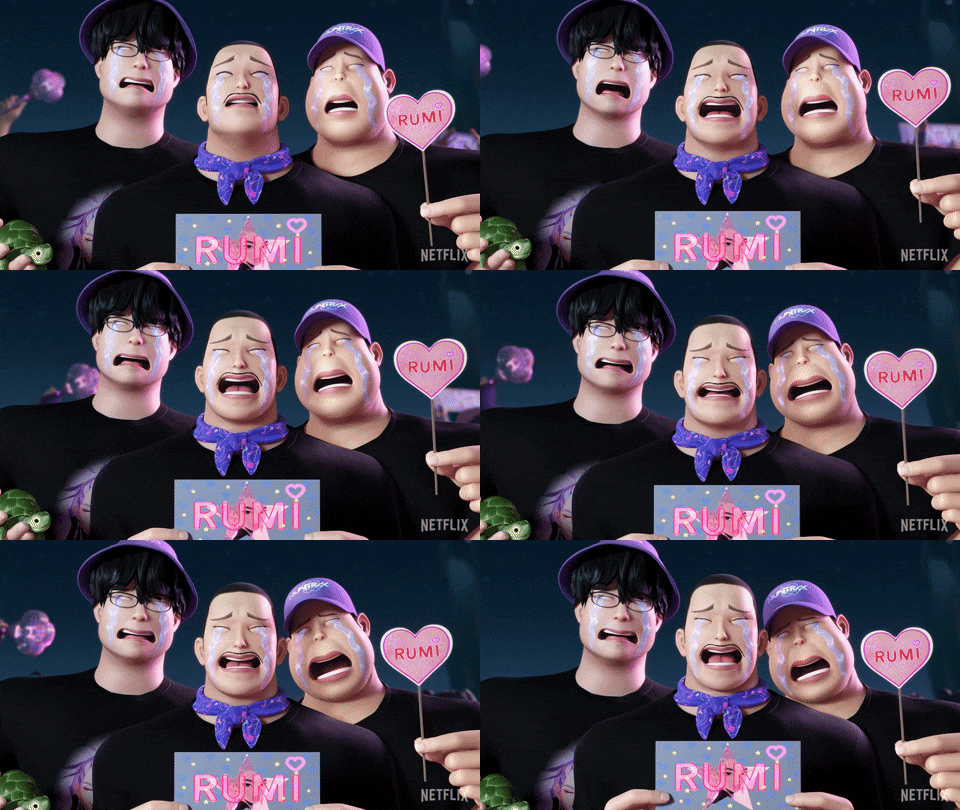
I couldn’t resist trying on a super clickbait-y title for size, but let’s dive in to what it is that really makes Kpop so special.
What I actually love about Kpop Demon Hunters
It addresses the trauma we all carry from rejection.
There are two moments in particular that stand out to me, as well as one absolute banger that captures this feeling so well.
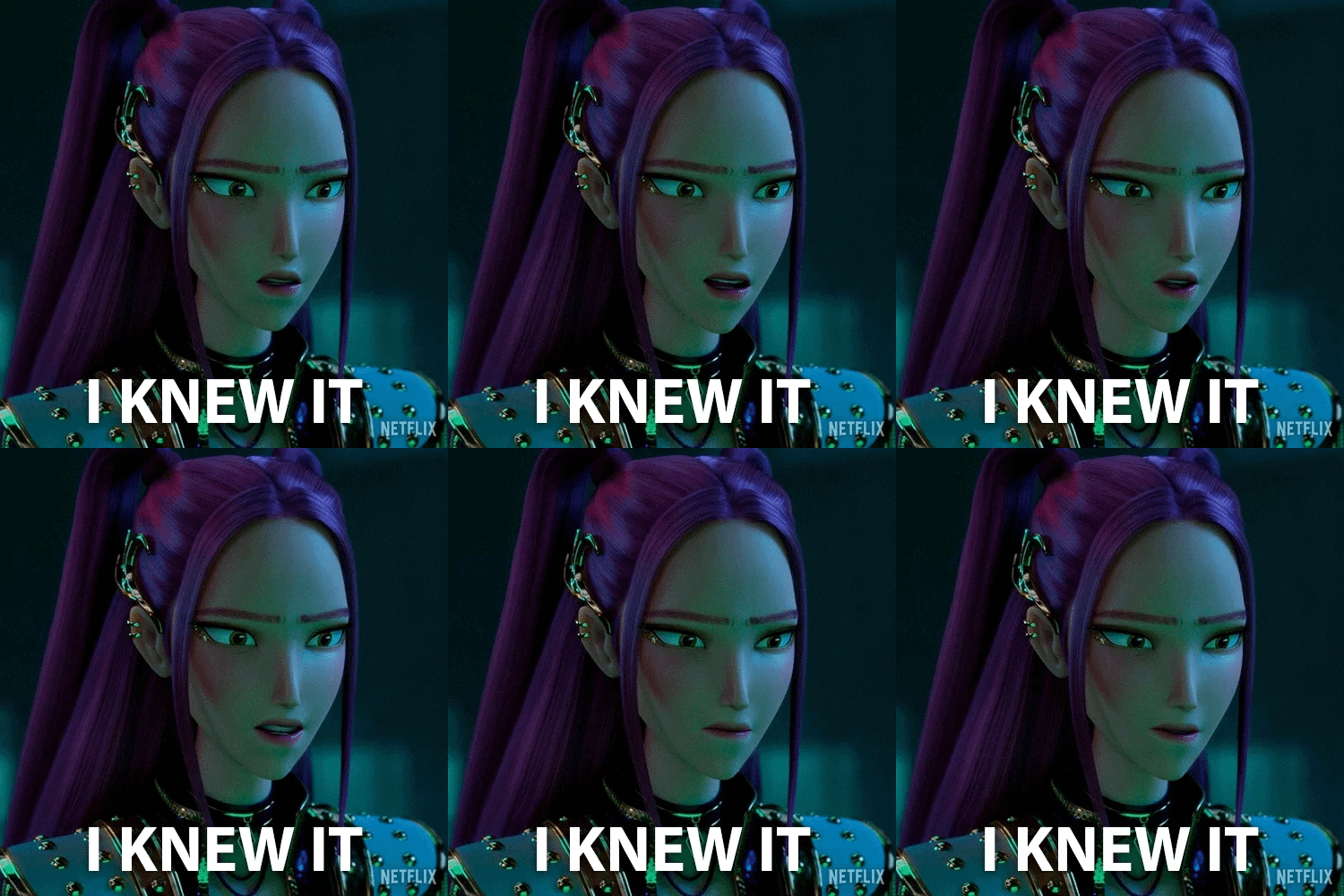
After the girls discover Rumi’s scars and they turn to Gwi-Ma’s voice, Zoey’s hears, “You’re too much and not enough.” If you’ve never related to this? Well, we’re just leading different lives then. Zoey and Mira both admit feeling like the family they found in Huntr/x was “too good to be true”—to be accepted as you are, to see your unique characteristics and quirks as strengths, to never feel cut down to a palatable size, but somehow not enough to fit into the everyday persona. Gwi-Ma baits this insecurity, this fear of rejection for being your genuine self, and it’s so effective.
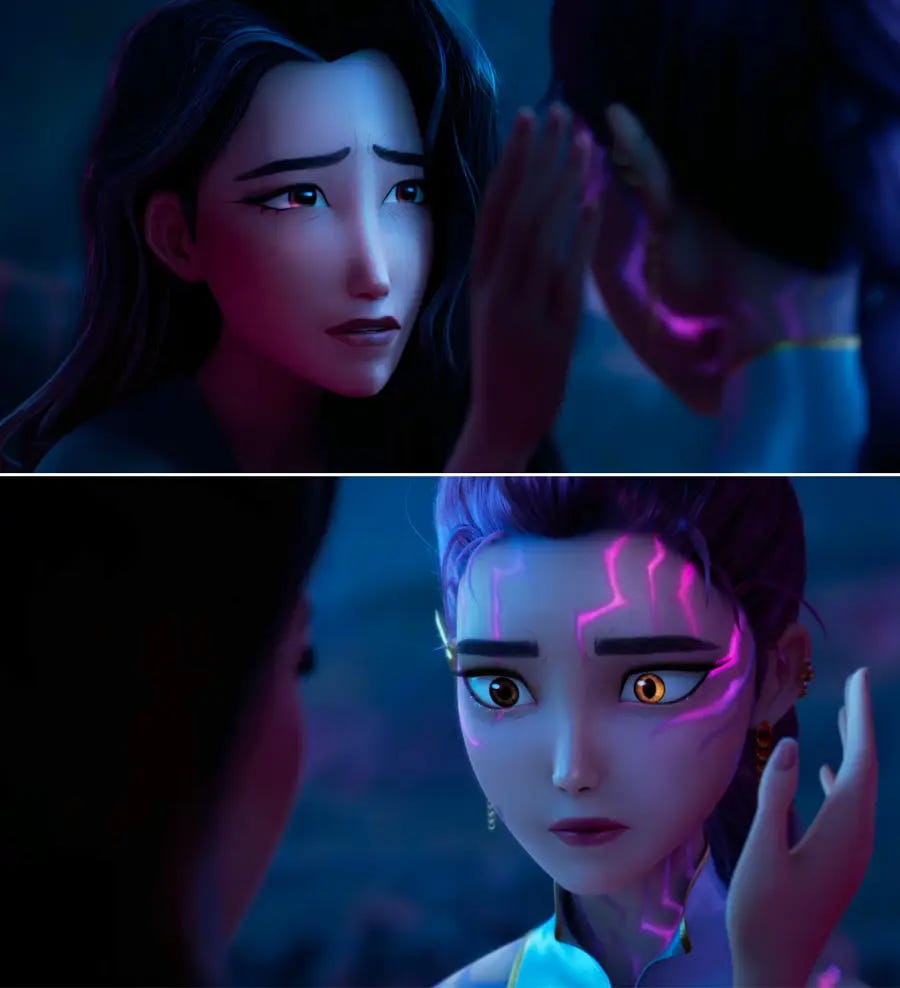
Meanwhile, Rumi confronts Celine, demanding why the woman who raised her couldn’t love her. Celine admits she does love her, but Rumi is quick to clarify: she means ALL of her.
Rumi says, “You told me to cover up. To hide.”
And Celine agrees, “Yes! Until we can fix everything. And we still can.”
And isn’t this fear or, frankly, truth, seated deeply in so many of us? Knowing or simply worrying that we aren’t accepted fully, but packaged in a manageable way, compartmentalized, with others hoping those other parts will stay hidden until they’re “fixed”?
To be seen and accepted conditionally, this is the reality for just so many of us, and we carry damage from this experience. But by Kpop Demon Hunters addressing it in a variety of ways, a variety of scenarios, it’s easy to feel seen. To feel less alone in this desire to be accepted fully, out of the box, rather than covered, hidden, fixed.
And even the baddest Kpop stars, who are literally just like, saving the world from demons day in and day out, have these insecurities lying deep in them.
It reflects genuine friendship. And not always in a good way.
OK, about those badass hunters? They’re the friends we all want and want to be, right?
Snack-driven
With bodies that belch (and, on the flip side, very unreal legs that never, never end)
Weird and quirky in
Cozy, ridiculous pants
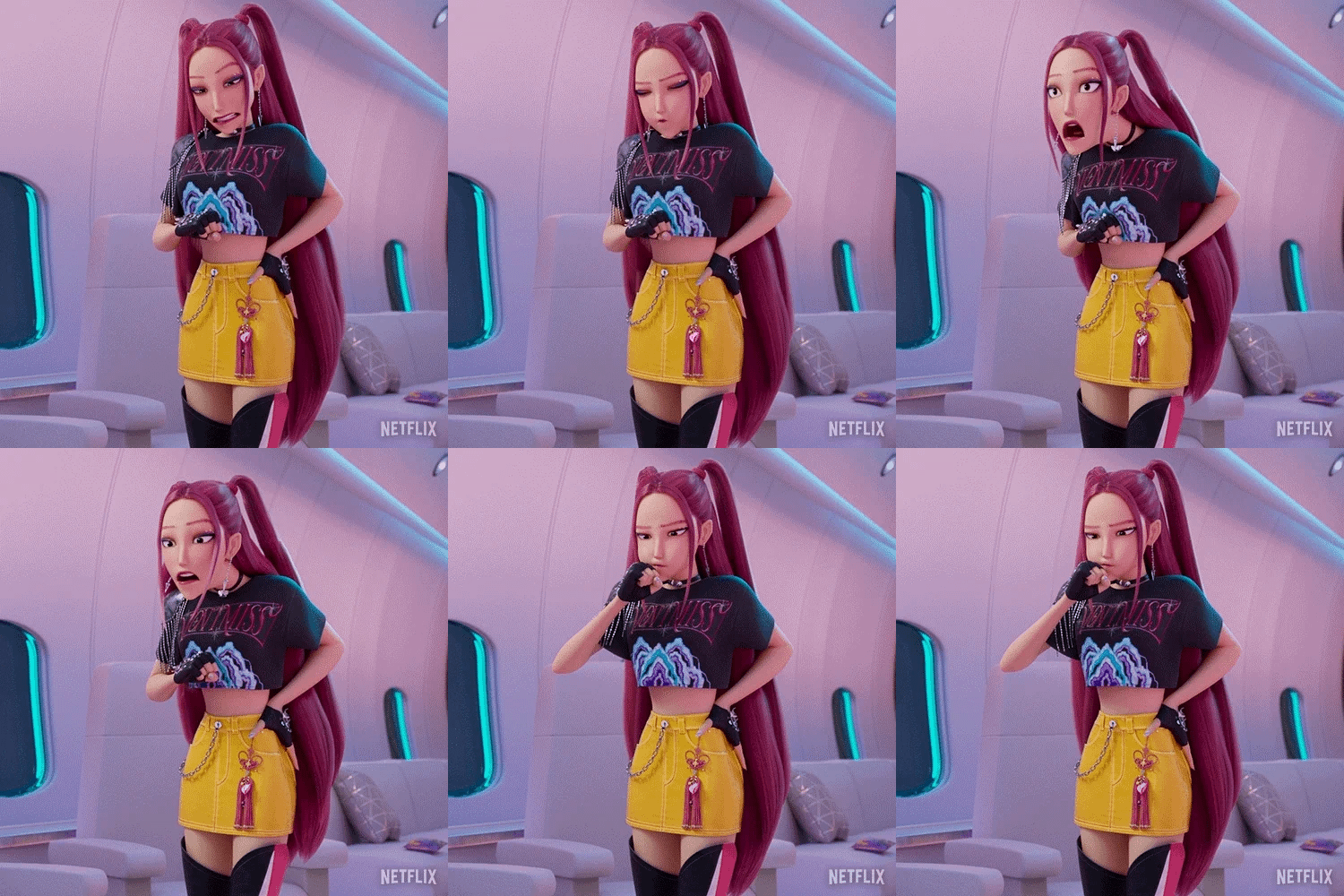
Who can just really be themselves together. Or can they? As Mira says, “I knew it was too good to be true.”
She knew that she could never really be her truest self, that the world could never see how she was different (or “wild”) as a strength, rather than a flaw. And the fact that she comes back with this response so quickly, after discovering Rumi’s secret? She was just waiting for the other shoe to drop. Waiting to find out that someone had been lying, that it couldn’t have been real.
This is real friendship to me, especially when you battle imposter syndrome or insecurities yourself. Do you feel accepted, like you fit in, loved for who you are? Absolutely. Most of the times. Some of the times. Except sometimes you leave and wonder why you said that weird thing, or if you’re too much, or they’re having a group chat without you invited.
But OK, girls love snacks.
OK, OK, OK, yes, we’re all of us battling insecurities, fighting Gwi-Ma in our heads, BUT SNACKS!!!
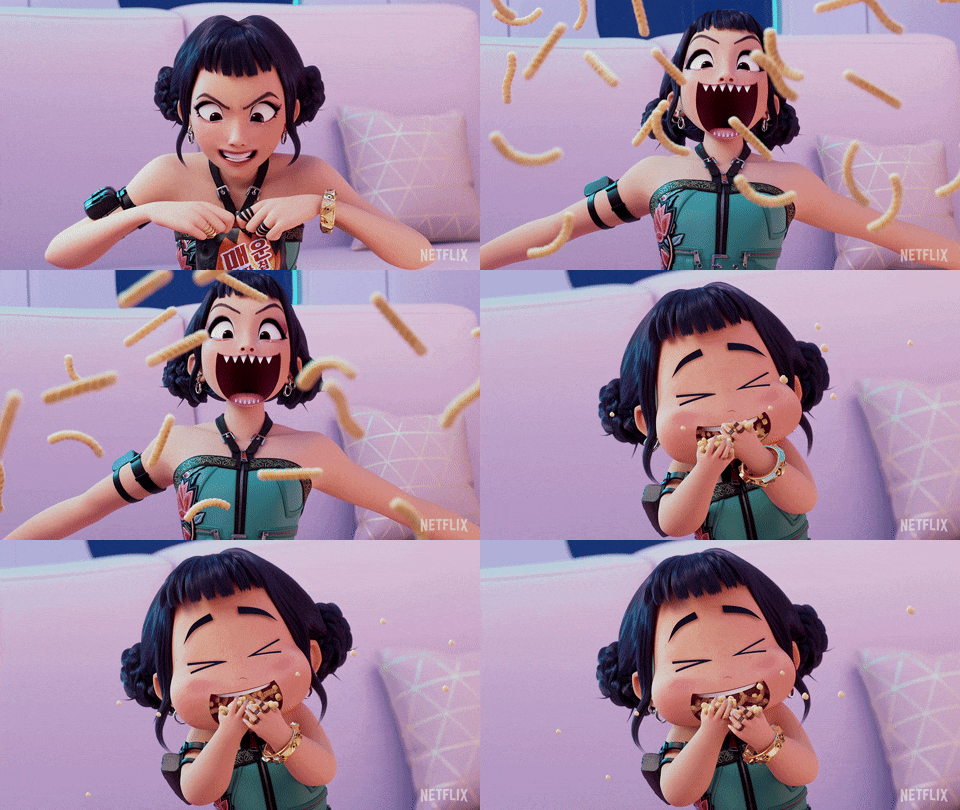
I love that these women are eating. And they’re eating a lot. In fact, when I was planning my Kpop Demon Hunters birthday party, I was so overwhelmed with food options from the movie that I had to narrow it down to like one-quarter of what they were shown eating in the show.
Now, do they look like realistic women? Not on your damn life. They weigh like 7 ounces each, but at least we’re seeing women eating actual food.
Er, a pixelated representation of instant ramyeon, but you know what I mean.
The women are powerful role models.
Like so many of us, I initially assumed this film was a kids’ movie, and my daughter started streaming it first on her own. I was swiftly infected by the delicious tunes and became an instant fan the first time we sat down to watch it together.
And what I love for her? The hunters are powerful role models. Not only are they physically powerful, able to easily slay dozens of demons with their traditional weapons. Their voices unite a hope from the fans that protects the world from harm.

But… they’re also at the top. They’re in charge. They’re calling the shots, releasing songs, paying Bobby to basically worry over them. The film’s only traditionally authoritative role over women—the doctor—is exposed as a quack.
Yeah, the women are strong, but they’re emotional too. And that’s perfect.
Yes, they’re strong. They’re bosses. They’re in charge. But they’re also crying over their feelings for each other.
When I was growing up, I often heard that a woman couldn’t be President of the United States, because would she start a war on her period?? I was told, “Women are too emotional, they can’t be trusted in roles of power!” In fact, that was an answer on a personality-typing quiz on OKCupid, which, for all you youngin’s, was basically Tinder-before-Tinder. Wild, right?
Now it’s easy to look around and see that this theory is madness, considering the volatility of the men in power around the globe. But women’s emotions have often been seen as weakness, rather than a strength. Feeling connection and attachment? This we can use in our advantage.
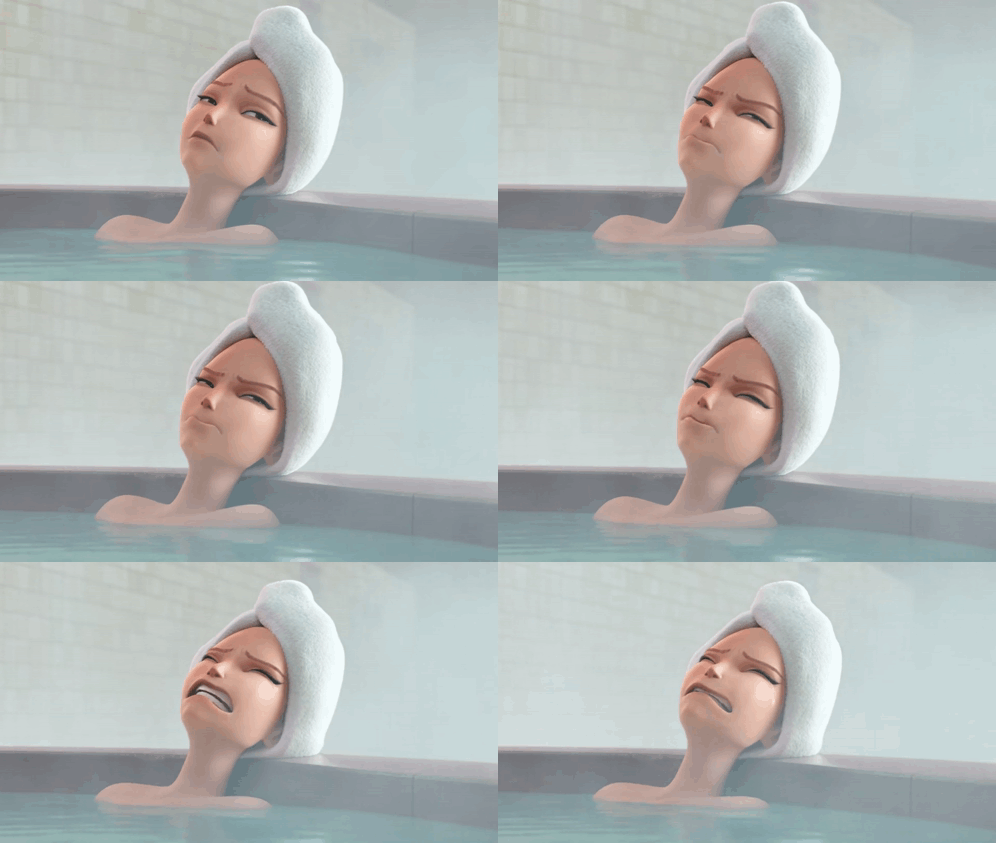
My heart twisted in the scene in the bathhouse, when Rumi finally joins them after sealing the golden Honmoon. Zoey says, “I’m just really glad you didn’t die, Rumi,” and starts crying. This? Expected. But then Mira—the badass, the “black sheep,” the wild child—starts tearing up, too, and it just broke open for me. Can you be a total badass and still get emotional? Abso-damn-lutely.
Crying because, I don’t know, your best friend didn’t die? Not a weakness. And it’s time we all see it that way.
Add in ridiculous, cozy pants and a love for teddy bears? It’s time to stop seeing strength as a masculine concept and embrace it with facets of softness, too. The women I know are strong AF—and their strength has nothing to do with rejecting fuzzy socks, glittery nails, or sloth stuffies.
The songs are amazing?? Where have they been hiding these?!
I’ll admit that I’m new to the Kpop world, but I made a deliberate choice a few months back to start exploring it. Why? It just looked like so much fun, and I was feeling a bit left out of it. And while I’d never claim to know much about it, the music, or the fandoms, I really want to know…
Where have they been hiding these tunes?!
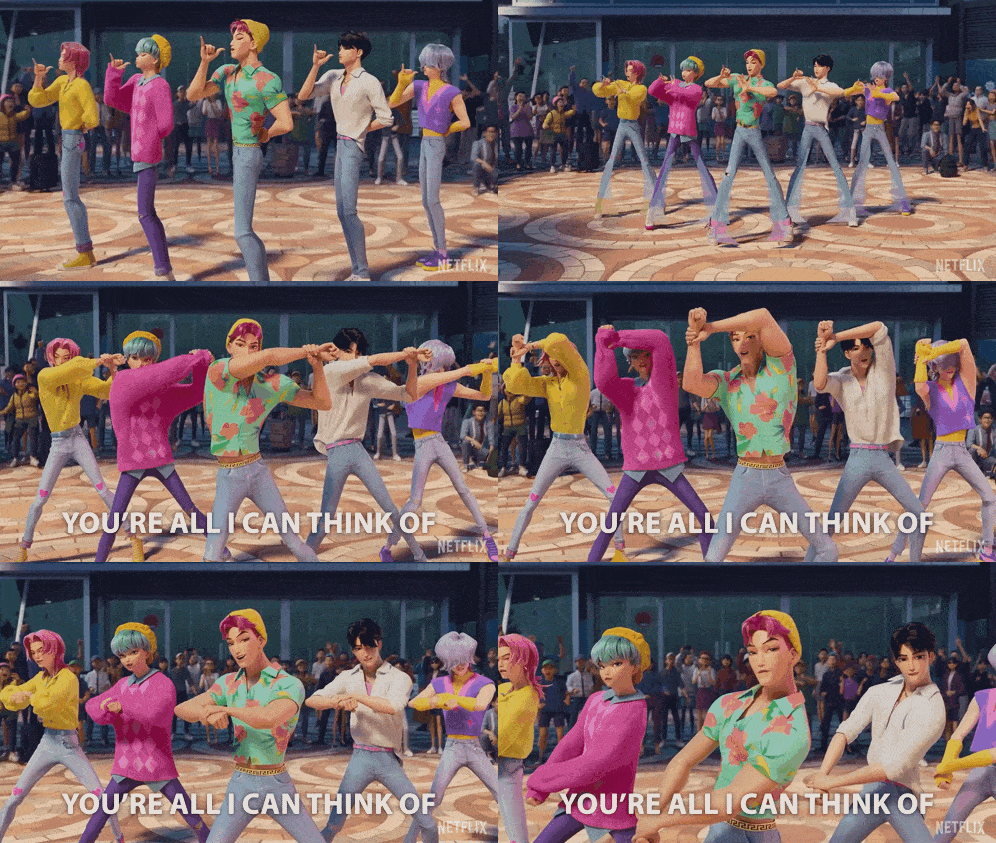
I haven’t heard such catchy songs in years, and they’re on repeat in our house. In my car. At my desk. Kids or no kids, I’m singing along. Simply infectious.
All hunters are women.
There’s something so powerful about the role of demon-slayer being women’s work.
Each generation, a trio of women is selected to protect the Honmoon with their voices and their weapons. And it comes easy to them, right? One night, they ping-pong a demon down the alley, and Mira’s inspired to add the rhythm of his ricochet to “Takedown.” Easy work.
But if all hunters are women…
Waaaait… Are the demons the… patriarchy?!
OK, I’ll let you dive into that one on your own.
But it’s not just the women who are powerful. It’s the fans.
Why do the Saja Boys exist at all? They’re trying to take the fans. Because the fans are the ones who truly generate the power to strengthen and maintain the Honmoon.
It’s easy to watch a Good Guys vs. Bad Guys trope and see the power in the heroes. But it’s not just there here—no, it’s with the average, everyday person who generates hope, security, and peace.
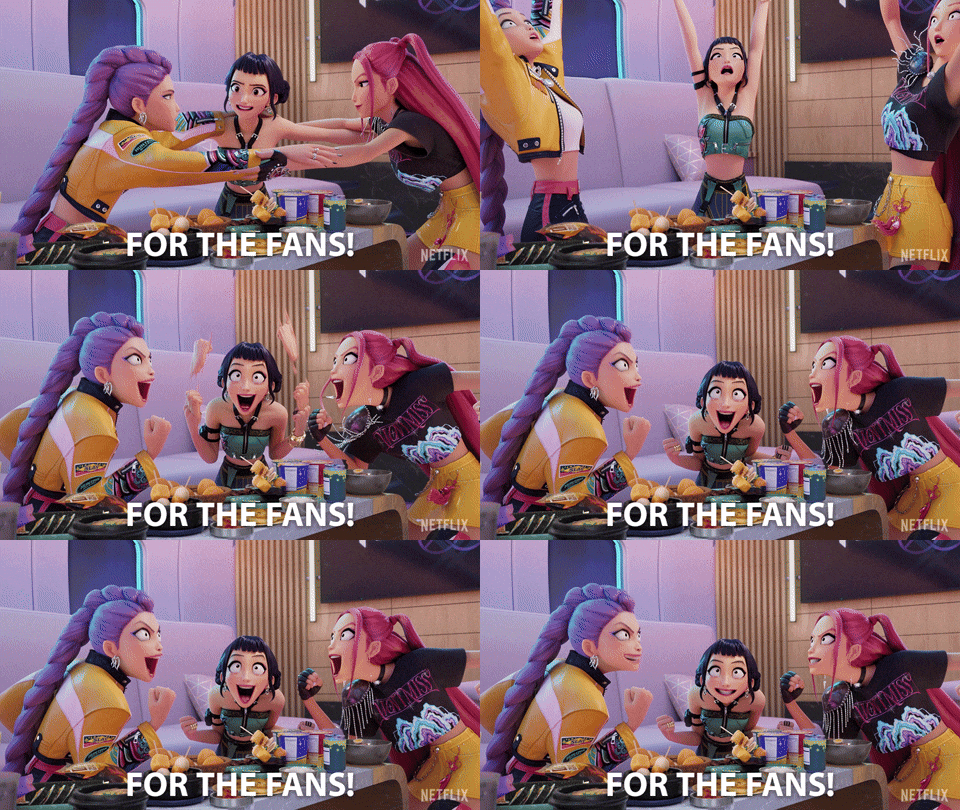
Together we can battle the bad guys, not by suiting up and whipping out a Four Tiger sword. We can fight just by banding together, to choosing goodness and kindness and equality and hope and love. Because where does Gwi-Ma corner you?
In your own head, alone. That’s where he gets you.
Gwi-Ma speaks to all of us.
It’s easy enough to see Gwi-Ma as a fantastical demon king for the sake of the film, until about 2/3 of the way through. Huntr/x breaks up on stage suddenly his voice isn’t just booming theatrically; it’s whispering in everyone’s minds. That little hook: I can help you. You never belonged. I can fix that.

And this is where it really lands. Because isn’t that exactly how our insecurities show up? Not as some big, obvious monster we can point at, but as a tiny voice that feels almost comforting. I can fix this. I can make you feel safe. Just listen. It’s the voice that tells us to overwork so we feel worthy, to over-give so we feel loved, to grab at control when we’re afraid.
The real danger isn’t that the voice exists—we all have it. The danger is in believing it, in letting it steer us. That’s when we trade peace for constant worry, love for grasping, calm for craving. Just like in the film, the damage comes not from the demon itself, but from the moment we decide to follow its whisper.
People can change.
Gwi-Ma’s voice can reach us all, prodding at our cracks and weaknesses. And sometimes we’ll give in—that’s just being human. Thankfully we don’t go like, full demon when we do, too, but Jinu proves one thing to us either way.
People can change. We are not our past mistakes.
And I am NOT TALKING TO YOU ABOUT YOUR EX-BOYFRIEND. He is not changing. Block his number!!!
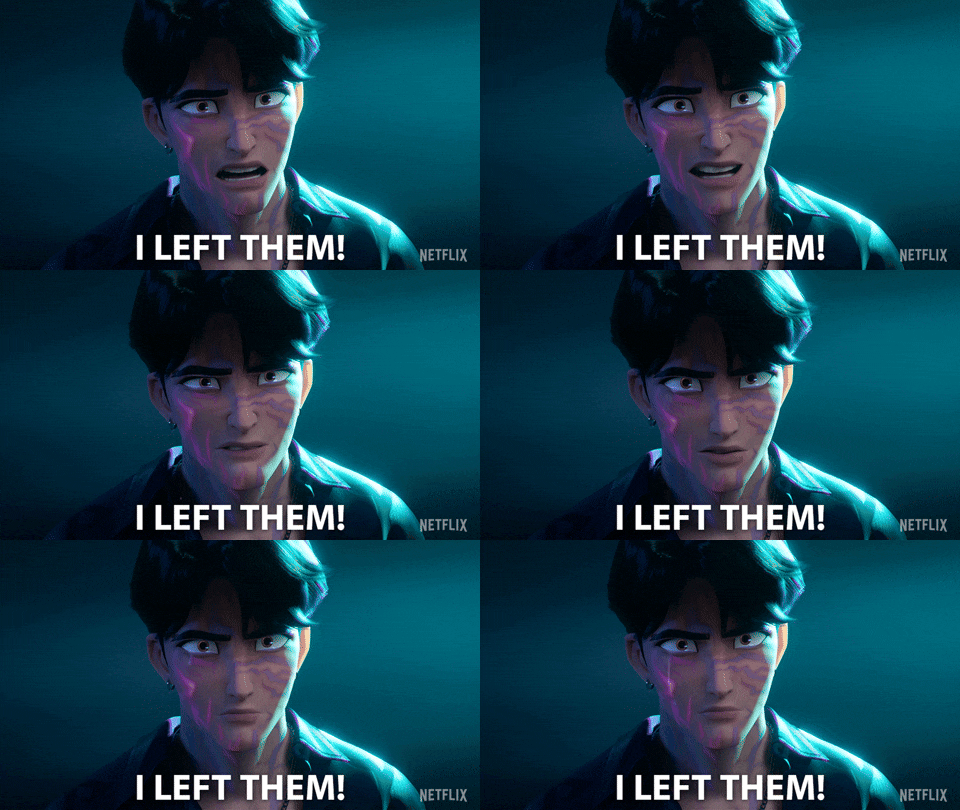
We so often hold onto those past mistakes, thinking they define us. Are they part of us? Yes. Do they shape who we are? Absolutely. Do they dictate who we are now? No way.
Changing is hard. Changing your ex-boyfriend? Even harder impossible. But who we were in the past is not who we are now, and we all have the power to shift toward who we want to be.
Back to more important themes…
The abs.
We love the abs. The abs are good. The abs are wholesome-ish.
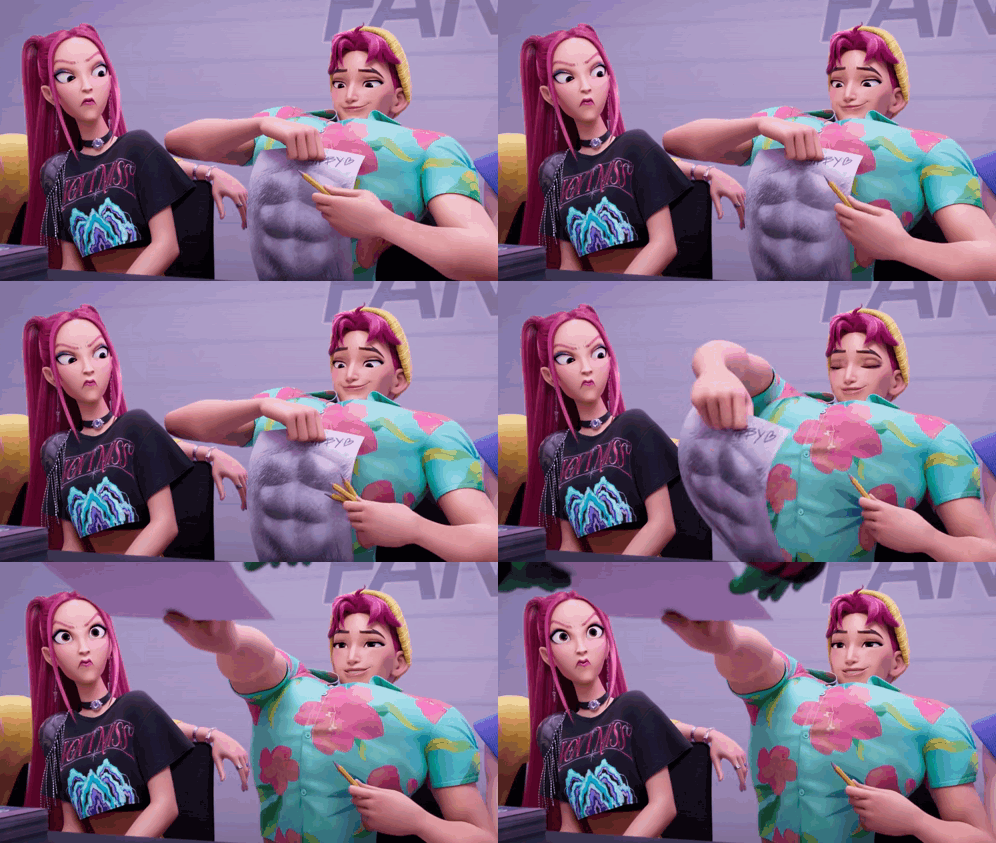
OK, OK, OK, speaking of abs…
It’s the perfect love story.
Any romantasy-smut lover will tell you that any delicious love story has one thing in common: wings they start out hating each other.
Ah, yes, tale as old as Wuthering Heights time and still just as satisfying.
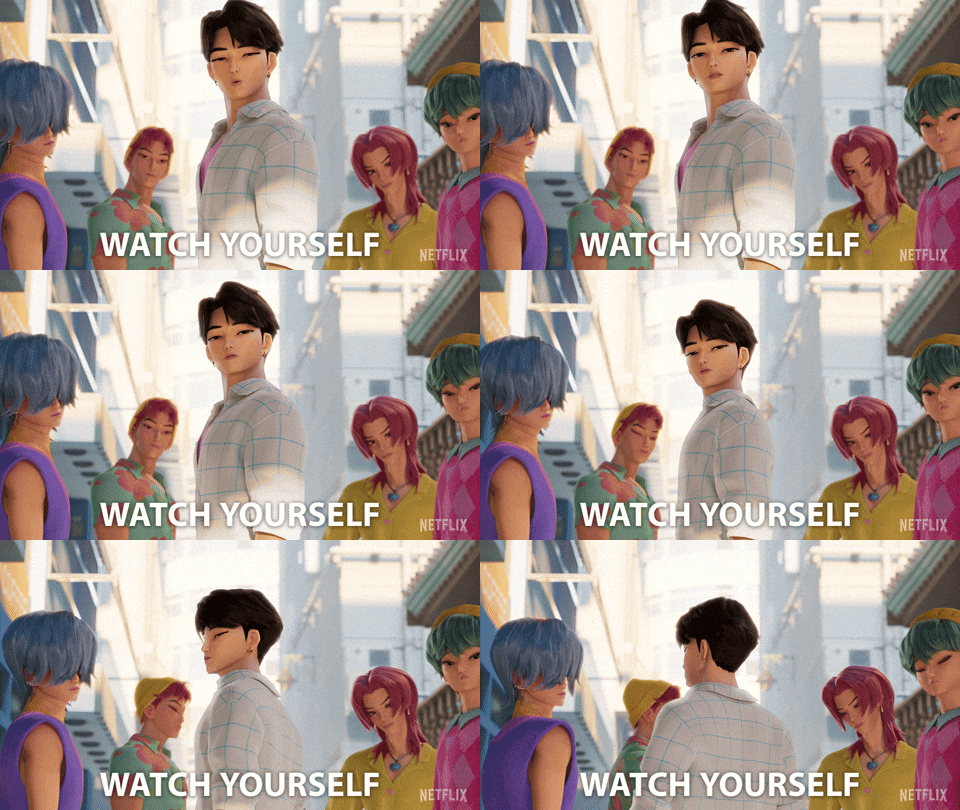
Here, the stakes rise even higher—Jinu’s very soul and redemption, and Rumi’s search for her own truth. Together they embody what love should be: seeing and accepting someone as they truly are. Watching their bond shift from contempt to curiosity to compassion—and, well, you know what comes next—is deeply satisfying.
Except in Kpop Demon Hunters, nothing comes next, because…
It’s perfectly wholesome and truly family-friendly.
Rarely do we find a movie or show that actually pleases the entire family. Usually, my husband and I settle for whatever the kids actually agree on, and we disassociate behind eyes that are generally directed at Hotel Transylvania.
This one, though? Everybody likes it. I like (love) it, my kids all love it (down to my four-year-old son), even my husband tolerates it. There are no curse words, no inappropriate scenes, just killer tunes, relatable themes, and a fight between good and evil. When was the last time this happened?
It helps that…
It’s just really cute AF.
That’s how I’m ending this. It’s cute AF, and the animation warms my demon heart.
What themes did I miss? What’s YOUR favorite part? Let me know in the comments!